
How to describe people is the question every storyteller eventually faces, usually right when a new character steps on stage and the scene begs for details. When you know how to describe people in stories, you create clearer imagery, stronger emotional pull, and characters who feel like they are truly alive. Writers need this skill because character descriptions shape tone, mood, and reader connection.
(more…)Category: Writing Guides
Creative writing guides for authors on dialogue, Scottish dialect, describing people and writing a novel, from a bestselling author and psychologist.
-

How to Write a Book, Story, or Novel: A Creative Writing Guide
Do you dream of writing your own book but feel overwhelmed by the process? Whether you want to learn how to write a novel, how to write a story, or simply improve your writing skills, this creative writing guide will show you exactly how to write a book and turn your ideas into compelling fiction that readers love.
(more…) -

How to Write True Crime: A Guide to Murder from Dahlia Cross
When learning how to write true crime stories that send shivers down your spine, few authors capture the essence of the genre quite like Dahlia Cross. Her latest book, Contract Killers: 25 True Crime Stories, is a masterclass in storytelling. It’s gritty, suspenseful, and deeply engaging. It’s part of her larger Murders and Mysteries series, a ten-book anthology that explores the most chilling corners of human behaviour.
(more…) -

How to Write a Children’s Book in 20 Steps (with Amazing Examples)
Here’s how to write a children’s book, step by step, with the best children’s book writing tips from Monty author Claire Owers and me. You’ll learn how to write, edit and publish a children’s book, with the right word count for a picture book or chapter book and the right age band for your reader. Publishing your own children’s book can cost nothing upfront, because Amazon KDP lets you publish a paperback and an ebook for free. These steps work for any kids book, whether you’re writing children’s stories for your family or for bookshops.
My primary 5 teacher wrote in my report card that I had a talent for creative writing. After my first book came out, she cooked me dinner, brought out albums of photos I’d never seen, and showed me her copy. It was homework, handed in 25 years late.
Children’s books stay with people that long, so they’re worth getting right. The short version of how to write a children’s book takes five moves. Choose your reader’s age, learn the word count for that age, give one character one problem worth caring about, and cut every word the pictures can carry. Then pick your route to publication.
If you’ve got a bedtime story a child keeps asking for, and no idea how it becomes a book with a cover, an ISBN, a barcode and a price, this guide is for you. Most of my books are for adults, so I wrote it with someone who has done this four times. Claire is a children’s author from Aberdeenshire who writes the Monty series of chapter books for five- to nine-year-olds, starring her family’s chocolate Labrador and his weakness for cheese. She self-published all four, and her advice runs through every step below.

The five golden rules for writing a children’s book
- Write for one age band and keep to its word count, which is 500 to 600 words for your average picture book.
- Give one main character one problem, and let them fail before they win.
- Leave room for the pictures by cutting anything an illustrator can show.
- Read every draft aloud, then test it on children who will give you honest feedback.
- Send agents the text only, and if you self-publish, budget for an illustrator and a cover designer.
BOOKMARK this step-by-step guide on how to write a children’s books in 20 easy steps. Then use this list to create your own amazing story books for kids!
Contents
Where do I start when learning how to write a children’s book?
The best place to start learning how to write a children’s book is by reading around 50 recent books for the age group you want to write for. Read them, then pick one format. The usual choices are board book, picture book, early reader, chapter book and middle grade. That choice sets your word count and who you pitch to.
Monty by the numbers, one self-published children’s series
Claire published the first three Monty books in eight months, between September 2020 and April 2021. Here’s the series:
- Monty: A Nose for Trouble came out in September 2020. Monty trashes the school fair, and Megan and her sister Nicole set out to cure his food obsession and his weakness for cheese. goodreads
- Monty: A Nose for Treasure followed in November 2020, at 150 pages in paperback. It’s an island adventure, with Monty’s sister Daisy along for the ride. amazon
- Monty, A Nose for Truffles came out in April 2021, at 184 pages. A camping holiday goes wrong when Soufflé the pig is pig-napped. amazon
- Monty, Double Trouble brings in a new fur-sister, Dot, with a habit of nipping tails. amazon
Each book runs around 150 to 200 words.
A series also does work a single book can’t, because a child who finishes book one asks for book two. For anyone working out how to write children’s books that sell, that’s the strongest argument for planning a series.
Stage 1. Planning how to write a children’s book
Step 1. Read 50 recent children’s books in your age band
Reading 50 children’s books published in the last five years, all for the age you want to write for, is the quickest way to learn how to write a children’s book for today’s readers. Classics show you what lasts. Recent books show you what agents, publishers and parents choose now, including how short picture books have become. Writer’s Digest goes further and suggests reading at least 100 picture books.
Borrow them from the library or sit in the children’s section of a bookshop. For each book, note the age on the back, the word count(counting the words in a picture book takes about five minutes), where the problem first appears, and the line or lesson a child would repeat in the playground.
Watch for the page a child turns back to. As a boy in Wick, I read a big full-colour book called Ancient Egypt until it fell apart, and the chapter that I remember most was the one on embalming. Children might reread a bit an adult would skip. A book with one of those gets read until the spine gives out.
If you’re new to writing at any length, my guide to how to write a book covers the habits that will help you.
Step 2. Choose your age band and children’s book word count
Every format has its own children’s book word count, and there are six to choose from. Most new writers start with picture books or chapter books. Picture books should aim for 500 to 600 words and stay under 1,000, and chapter books run from 4,000 to 15,000 words. Choose the format first, because it sets your page count and who you pitch to.
Format and reader age Typical length Board book, ages 0–3 50 to 100 words in total, about 10 card pages Picture book, ages 3–7 500 to 600 words, never over 1,000, 32 pages Early reader, ages 5–7 Up to about 1,500 words Chapter book, ages 6–9 4,000 to 15,000 words, about 60 to 150 pages Middle grade, ages 8–12 30,000 to 60,000 words Young adult, ages 12 and up 50,000 to 80,000 words These ranges were checked against several sources. Writer’s Digest (via kdpbook.io) and Mary Kole cover picture and chapter books. Write for Kids gives middle grade as about 30,000 to 60,000 words. UK Publishing House puts board books as low as 50 to 100 words and young adult novels at 50,000 to 80,000. Usborne’s That’s not my bus… is a typical 10-page board book. Mary Kole sets a lower ceiling for picture books aimed at the youngest readers, at 400 words.
My father gave me The Hobbit far too young, and I struggled through it. It’s still my desert island book. Children will forgive a book that’s too hard if the story is strong enough, but they shouldn’t have to, and the age band on your cover is a promise to the adult buying it.
Your kids book listing will carry an age range (Claire’s Monty books say 5 to 9), so choose the narrowest honest one. A book bought for the wrong age is the one that gets the disappointed review. For adult fiction lengths, see average length of fiction writing.
Step 3. Find a children’s book idea with a twist, and check it isn’t taken
A strong children’s book idea puts one unexpected thing into a situation children already know. In Judith Kerr’s The Tiger Who Came to Tea, a hungry tiger walks into the family kitchen while Sophie and her mummy are having tea. In Claire’s books, a chocolate Labrador with a weakness for cheese leads two sisters into chaos. Search for your premise before you write.
Kerr’s tiger grew out of a trip to the zoo and a lonely afternoon with her daughter, who kept asking her to ‘talk the tiger’ until the story was just as she liked it. If a child keeps requesting one of your bedtime stories, you may already have your idea.
Then check the competition before writing a children’s book on that idea.
- Search Amazon’s children’s books and your library catalogue for your premise in three or four words.
- Ask a children’s librarian or bookseller what children ask for that they can’t find.
- Ask a teacher which books disappear from the class library and never come back.
- Read the one-star reviews of the closest book. They tell you what readers wanted and didn’t get.
If your idea has already been done, that’s good news, because it means children want it. Change who tells it (the parrot narrates the pirate’s voyage) or who it happens to (the pirate is scared of water). As Claire puts it, ‘Make sure that you have a fresh take or a point of difference. Mixing the familiar with the unexpected can work well.’
Step 4. Write for two readers, the child and the adult who buys the book
Writing a children’s book means writing for two readers. The child listens or reads. An adult chooses the book, pays for it and, with a picture book, reads it aloud, often for the hundredth time. Nielsen’s figures show women bought 59% of children’s and YA books in the UK in 2020, so the first person your book must win over is usually a parent or a teacher.
Adults look for a story they won’t mind reading aloud for the fortieth time, and a joke or two aimed over the child’s head. Matty Long’s Super Happy Magic Forest does both, and readers praised its jokes on every page for children and grown-ups alike.
Parents also buy books that teach something useful, like sharing or being brave, as long as the lesson arrives inside the story. Claire’s warning is worth pinning above your desk. ‘A strong message can be valuable in children’s storytelling, but don’t be tempted to talk down to children. A subtle message should feel organic in the story and will resonate more than a lecture.’
Step 5. Build a children’s book character kids want to be friends with
A strong children’s book character has one clear want, one visible quirk and an age close to the reader’s, or slightly older. Write those down before you draft, along with what scares them and what makes them laugh, and you’ll know how they behave on every page.
Claire’s test is a simple one. ‘I find that children identify well with a main character that is around the same age as them, or slightly older. If your reader wants to be friends with your main character then you’re on the right track!’
Answer these before you write a line.
- What’s their name and age?
- What do they want more than anything in this book?
- Which three words describe them?
- What’s their catchphrase or habit?
- What scares them, and what makes them laugh?
- Who do they clash with?
- Do they have a pet, a hobby or a secret?
- What will a child remember about them a week later?
My PhD studied the connections between perception, emotion and behaviour, and I now use the CBT five areas model to build characters. It splits any moment into five parts. Children’s characters show all five on the surface, which makes them easy for young readers to follow. Here’s Isla, seven, on her first day at a new school.
- Situation. The teacher asks her to stand up and say her name.
- Thought. ‘Everyone will laugh at my voice.’
- Emotion. Fear.
- Physical sensation. Hot cheeks and a wobbly tummy.
- Behaviour. She whispers her name to her shoes.
Change one area and you’ve got a story. If Isla thinks ‘My dog would do this better’, her behaviour changes, and so does the book. For physical description, my guide to how to describe people has the techniques. In a picture book, leave most of it to the illustrator.
Stage 2. Writing a Children’s Book
Step 6. Give your character a problem, and let them fail first
Writing children’s stories means giving your main character one problem to solve, with each attempt harder than the last. Bring the problem in on the first page or two, let the character fail at least twice, and make sure the child solves it in the end, with grown-ups kept to the edges.
Claire doesn’t wait long. ‘I try to introduce the key problem as early as possible, usually on the first page or two, kids don’t tend to like a slow burner!’
Think of it as The Crystal Maze, with every room harder than the last and the crystal waiting in the final one. Say your hero is on a treasure hunt. They dig up a boot, then a bottle cap. Rain turns the garden to mud. Then they’re called in for tea just as the spade hits a box.
Check your draft against these four questions.
- Does the character face several obstacles, rather than one?
- Does the reader know why solving it matters to this character?
- Does each attempt cost them more than the last?
- Does the character, rather than an adult, make the final move?
Step 7. Open fast, or open in a voice
Open a picture book on the problem or the action, because young readers decide fast and the word count leaves no room for backstory. A chapter book can open in a voice so distinctive that the reader wants more of it, as long as the problem arrives by the end of chapter one.
Claire opens fast. ‘You want to hook your reader from the first sentence. In my experience, kids are less likely than adults to stick with a book that doesn’t grab them early on. An action scene can be a great place to start.’
When I was Editor-in-Chief of an independent publishing house, reading over 100 submissions a year, the openings I liked best began in a voice that could only belong to that narrator, often before anything had happened at all.
So here’s my pick. For picture books, follow Claire and start with action. For chapter books, start with voice, and get the trouble moving before chapter two.
Step 8. Choose your point of view, tense and vocabulary
Most picture books use third person and past tense, because both are easy to read aloud. Present tense suits stories that happen as you read them, like Michael Rosen’s We’re Going on a Bear Hunt. Pick one point of view and one tense, keep them for the whole book, and match your vocabulary to the reader’s age.
Claire suggests trying more than one. ‘Point of view and tense are a matter of personal preference, and different styles will work better with different stories. Try writing your opening lines a few times in different styles, and see which feels best, just make sure to stick to the same style throughout the story.’
First person works well in chapter books, where a funny narrator can carry a whole chapter on attitude alone.
For early readers and chapter books, borrow a test teachers use. The five finger rule, which Scholastic explains for parents, has a child read a page and hold up a finger for every word they can’t read or say. Two or three fingers means the book is about right. Run it on your draft with a child in your age band.
Step 9. Decide whether your children’s book should rhyme
Only rhyme if you have the time. Rhyme works when the rhythm holds in every line, whoever reads it and at whatever speed, and a forced rhyme is one of the quickest ways to lose an editor. Mary Kole warns that rhyming picture books are a tough market and that many agents and publishers aren’t looking for them, so a strong story in prose has the better chance of getting published.
Hand your rhyming draft to a friend who has never seen it and ask them to read it aloud. Mark every place they stumble. If they stumble more than once, the metre needs work, or the story wants to be prose.
For the masters, flick through any Dr Seuss book or Julia Donaldson’s The Gruffalo. The stories would still work without the rhyme, so that’s the test.
Step 10. Use repetition and patterns
Repetition lets young children guess what comes next, and guessing right is half the fun. Usborne’s That’s not my… board books, written by Fiona Watt and illustrated by Rachel Wells, have run since 1999, repeating their title line on every page until the last one, where the right puppy, bus or unicorn finally turns up.
The wolf in The Three Little Pigs huffs and puffs at each house for the same reason. The pattern sets up the surprise.
Claire uses it too. ‘Most picture books for younger children will involve repetition of some kind, it really helps them to connect with the story and anticipate what’s coming next.’
In chapter books, repetition becomes the running joke. Monty’s weakness for cheese turns up in every book, which gives a young reader something to look forward to in the next one.
Sound patterns count as well. Pamela Duncan Edwards built Some Smug Slug as an alliterative tale, and Henry Cole hid an S on every page of the pictures.

Stage 3. How to Edit a Children’s Book
Step 11. Write for your children’s book illustrator with page turns, spreads and art notes
A standard picture book has 32 pages, because printers bind pages in groups of eight. After the title and copyright pages, you have about 14 double-page spreads for the story. Split your text into 14 scenes, put each page turn where you want a surprise, and cut anything the pictures will show.
Once the title, copyright and dedication pages take their share, about 28 story pages remain, or roughly 14 spreads. Here’s one common way to lay them out. Publishers move the front matter around, but the shape holds.
Pages What goes there 1 Half-title or an opening picture 2–3 Title page and copyright 4–5 Spread 1, meet the character and the problem 6–19 Spreads 2 to 8, attempts that fail, each bigger than the last 20–27 Spreads 9 to 12, the worst moment, then the turn 28–31 Spreads 13 and 14, the win and the callback 32 The last joke or a quiet final picture Make a dummy before you edit. Fold eight sheets of A4 in half, staple them along the fold and number the pages 1 to 32. Write your text on to each spread. Gaps and crowded spreads show up straight away.
Keep art notes for moments when the picture says what the words don’t. If your text reads ‘Nobody had touched the cake’ and the picture should show the dog with icing on his nose, add a one-line note. Otherwise, trust the illustrator.
Give your illustrator something worth drawing. Super Happy Magic Forest sends a unicorn, a gnome, a fairy, a faun and a mushroom on a quest, with jokes and details to pore over on every page. An ordinary setting works too, if something extraordinary walks into it, as Judith Kerr’s tiger proves in a family kitchen.
If you’re submitting to agents, send words only. The publisher chooses the illustrator.
Step 12. Land the ending
End a children’s book soon after the problem is solved, with a win the main character earned. The strongest endings call back to the opening with a repeated line or a returning joke, and they finish within a page or two of the climax.
Claire’s rule for endings leaves room for mischief. ‘Happy endings are important for little ones, but that doesn’t mean that they need to be predictable. As long as all of the story threads reach a satisfying conclusion, then a funny twist at the end can be brilliant and memorable.’
Perhaps your character wanted the biggest present at the party, and comes home happiest with the cardboard box it came in.
Step 13. Choose a title children can say and parents can find
A good children’s book title is short, easy to say aloud and tells a parent what kind of book it is. Keep a working title while you draft, write ten versions at the end, and search each one. If your favourite is already a bestseller, pick another.
Most strong titles fall into one of four types.
- A mystery, like Frances Hodgson Burnett’s The Secret Garden, which promises a secret.
- An instruction, like Mo Willems’ Don’t Let the Pigeon Drive the Bus!, which children long to disobey.
- Alliteration, like Some Smug Slug, which is fun to say aloud.
- The hero plus their trouble, like Claire’s Monty: A Nose for Trouble.
Test your top three on children and adults. The one a child repeats back to you without being asked is usually the winner.
Step 14. Edit your children’s book to word count, then read it aloud
Editing is where you really learn how to write a children’s book, so give it two passes. The first pass is for story, and asks whether every spread or chapter moves the problem forward. The second is for words, and cuts anything the illustration will show and any line you stumble over aloud. Then read the whole thing aloud again, to someone else.
Claire is blunt about the work involved. ‘Don’t underestimate the work involved in writing a children’s book. They demand all of the same elements as a book for grown-ups; a strong hook, a well-considered story arc, an inspiring setting and characters to fall in love with.’
The one time I entered a primary school poetry-reading competition, I was whisked into a hall full of strangers to recite a poem I’d half-memorised. I can’t remember the poem. I remember the terror. Read your draft aloud anyway, ideally to a room. You’ll hear every clunky line before a parent does.
When I taught academic writing, the commonest mistake I saw was leaving work to the last minute. My line was ‘Given enough time, we can accomplish anything.’ A picture book has nowhere for a rushed line to hide, so give the draft a week in a drawer before the second pass. Late homework is allowed here.
Before you move on, check each of these.
- The word count sits inside your format’s range from step 2.
- The problem appears on the first spread or in chapter one.
- Each spread shows a new scene.
- Page turns land on surprises.
- You can read it aloud without stumbling.
- The character, rather than an adult, solves the problem.
Step 15. Test it on children, then hire a children’s book editor
Before you pay for editing, read your draft to children in your age band, through a library or a school, with a parent’s say-so. Watch more than you ask, because a fidget tells you more than ‘I liked it’. Then hire an editor who has worked on your format, and fix the overall story before the sentences.
Some of the best children’s book writing tips come from children, and Claire relies on their honesty. ‘I’m inspired by the energy, creativity and brutal honesty that children have when coming up with story ideas and reading their favourite books!’
Editing comes in layers, in this order.
- Developmental edit. Fixes plot, character, pacing and age fit.
- Line edit. Fixes rhythm and read-aloud flow.
- Copy-edit and proofread. Fixes spelling, grammar, punctuation and consistency, and for picture books comes after the art is placed.
Edit the story first and the commas last. Fixing grammar in a scene you later cut is money down the drain.
Ask any editor which books they’ve worked on in your age band, and for two authors you can contact. Membership of SCBWI, the Society of Children’s Book Writers and Illustrators, tells you less than you’d think about an editor, because SCBWI British Isles welcomes published, self-published and brand-new writers alike. It’s a brilliant place to find a critique group.

Stage 4. How to Publish and Sell a Children’s Book
Step 16. Decide how to publish your children’s book
Traditional publishing pays you an advance and covers the costs, but you usually need an agent and you give up control of the art. Self-publishing gives you control and a bigger share of each sale, but you pay for illustration and editing yourself. My pick is the traditional route for picture books and self-publishing for chapter books like Claire’s.
Colour printing makes publishing your own children’s book costly when it’s a picture book, and hard to price. KDP’s hardcovers also need at least 75 pages, so a 32-page hardcover picture book has to be printed elsewhere. A chapter book is mostly text, prints in black and white, and grows into a series.
Traditional publishing
- The publisher pays for illustration, editing and printing.
- In the UK, you usually need an agent.
- For a picture book, you send the text only.
- A picture book paperback typically pays a 7.5% royalty, split equally when the author and illustrator are different people, so the author gets 3.75%.
- You have little say over the art, but bookshop shelves are far easier to reach.
Self-publishing
- You pay for illustration, editing and the cover.
- You don’t need an agent.
- On KDP, paperbacks pay 60% or 50% of the list price, depending on price, minus the printing cost, and ebooks pay 35% or 70%.
- You control every picture and the cover, but bookshop shelves are hard to reach.
Step 17. On the traditional route, find a literary agent for your children’s book
Most UK publishers accept submissions only through literary agents. Find agents who represent your format in the Children’s Writers’ & Artists’ Yearbook. Then send each one exactly what their website asks for, which is usually a query letter, a short synopsis and, for a picture book, the full text.
- Shortlist 20 agents who represent your format and age band, using the Yearbook and agency websites.
- Read each agent’s guidelines and recent deals before you write a word to them.
- Write a one-page query letter with a paragraph on the story, the word count and age band, two lines about you, and why this agent.
- Format the manuscript double-spaced, with no illustrations unless you’re an illustrator yourself.
- Track every submission in a spreadsheet, and expect silence from many of them.
Competitions get you noticed too. My writing competitions list is organised by month, and more submission guides are on my free author resources page.
Step 18. To self-publish a children’s book, hire an illustrator and a cover designer
If you self-publish, you commission the art. Choose an illustrator whose portfolio already shows the style and age band you want, agree in writing who owns the images and where you can use them, and budget for the cover separately, because online the cover sells the book before anyone reads a word.
Claire learned this with her first book. ‘I have some basic graphic design training so initially I did my own cover design, but once the first book started to sell well, I decided to invest in a professional one and used Fiverr to find a designer. The new cover really shifted sales up a level.’
Ask every illustrator these questions.
- Have you illustrated a book in this format before?
- How many spreads or pictures does the fee cover, and how many rounds of changes?
- Who owns the copyright, and can I use the art on adverts, merchandise and later editions?
- Will you supply print-ready files at the trim size and bleed my printer needs?
- When will each stage be ready?
In UK Government Copyright, an illustration’s copyright arises automatically the moment it’s made, so the contract decides what you can do with the art. Bring a rough sketch of each spread, however simple, so you’re both picturing the same book
Step 19. Publish on Amazon KDP, Kindle Unlimited and beyond
Amazon KDP lets you self-publish a children’s book for free, as a paperback, which needs at least 24 pages, and as an ebook. Enrolling the ebook in KDP Select puts it in Kindle Unlimited, but makes that ebook Amazon-only for 90 days. Skip Select if you’d rather sell the ebook through Apple Books, Kobo and libraries via Draft2Digital.
- Paperbacks. Since June 2025, KDP has paid 60% of the list price at or above a set price and 50% below it, minus the printing cost. Printing cost rises with page count and with a colour interior, so a picture book needs a higher price than a black-and-white chapter book of the same length.
- Ebooks. These earn 35% or 70%, depending on the price band.
- Kindle Unlimited. Amazon divides a monthly fund by the total pages read and pays each author their share. The exclusivity covers the ebook only, so your paperback can be sold anywhere.
- Going wide. Draft2Digital sends ebooks to Apple Books, Barnes & Noble, Kobo and library distributors such as OverDrive, and now offers print on demand too.
Here’s how Claire describes the first printed copy. ‘I was filled with a surreal, childlike glee when the first printed copy of my book arrived in the post. It felt amazing to hold it in my hands; a condensed, beautiful version of all the hours of hard work. But the best reward of all is hearing from your first avid reader. Children really are the best fans, they truly fall in love with your world and characters, and being a small part of their childhood is an honour.’
Step 20. Sell your children’s book through schools, libraries, reviews and a series
Once you know how to write a children’s book, the next job is getting it in front of adults. Children’s books sell through people who meet the author or trust whoever recommends the book. Plan your launch around people, with school and library visits, local press, a launch event and reviews from parents. Then write the next one, because a series lets every new book send readers back to the first.
Local press is the easiest coverage a new author can get. Send your local paper a short release, a photo of you with the book, and a reason the story belongs in their paper.
For school visits, contact the school librarian, offer a reading and a short writing activity, and let the school order signed copies in advance.
Questions about how to write a children’s book
How much money can you make writing a children’s book?
Most children’s authors earn modestly. The 2022 ALCS survey put median earnings from writing at £7,000 a year for authors who write as their main job. A traditionally published picture book author typically earns 3.75% of the cover price, about 30p on a £7.99 paperback, and only once the advance has earned out.
Do children’s books sell well?
Can I use ChatGPT to write a children’s book and sell it?
You can, but Amazon KDP requires you to declare AI-generated text and images, including the cover, even if you edited them heavily afterwards. Using AI only to brainstorm, or to check writing you created yourself, doesn’t need declaring (KDP content guidelines). A story only you could write is still the one worth selling.
Do I need to copyright my children’s book before I send it out?
How long does it take to write a children’s book?
A picture book draft can take an afternoon, but getting it right usually takes months of rewriting and reading aloud. Chapter books take longer, though a series picks up speed, and Claire published the first three Monty books between September 2020 and April 2021. Self-publishing adds time for editing, illustration and formatting.
Writing a memorable children’s book
Which children’s book did you read until it fell apart? Tell us in the comments, along with the children’s book you’re writing now.
My P5 teacher kept my book beside her photo albums. Write yours well enough that a child keeps it beside their bed.
Subscribe below to get an email when the next guide goes live. And if you write for older readers too, my craft guide, How to Write Fiction: A Creative Writing Guide for Authors, includes how psychology can help writers stand out.

Stay creative,
Aaron Mullins and Claire Owers
Subscribe to get free stories
Pop in your email to join over 2,000+ readers and writers who receive free stories, tips, and advice:
Claire Owers is a children’s book author living in the North East of Scotland with her husband, two girls and one slightly daft Labrador, Monty – the unwitting star of the show! Her sports coaching background helps her wrangle this unruly mob. She loves working with kids, taking inspiration from their energy, creativity and brutal honesty. Claire self-published her Monty series of children’s chapter books through Amazon. These funny and fast-paced pet adventure stories are ideal for 5-9 year old animal lovers.
How to Write Children’s Books
Writing for older readers too? Browse more free resources for writers, with guides on characters and book lengths. -
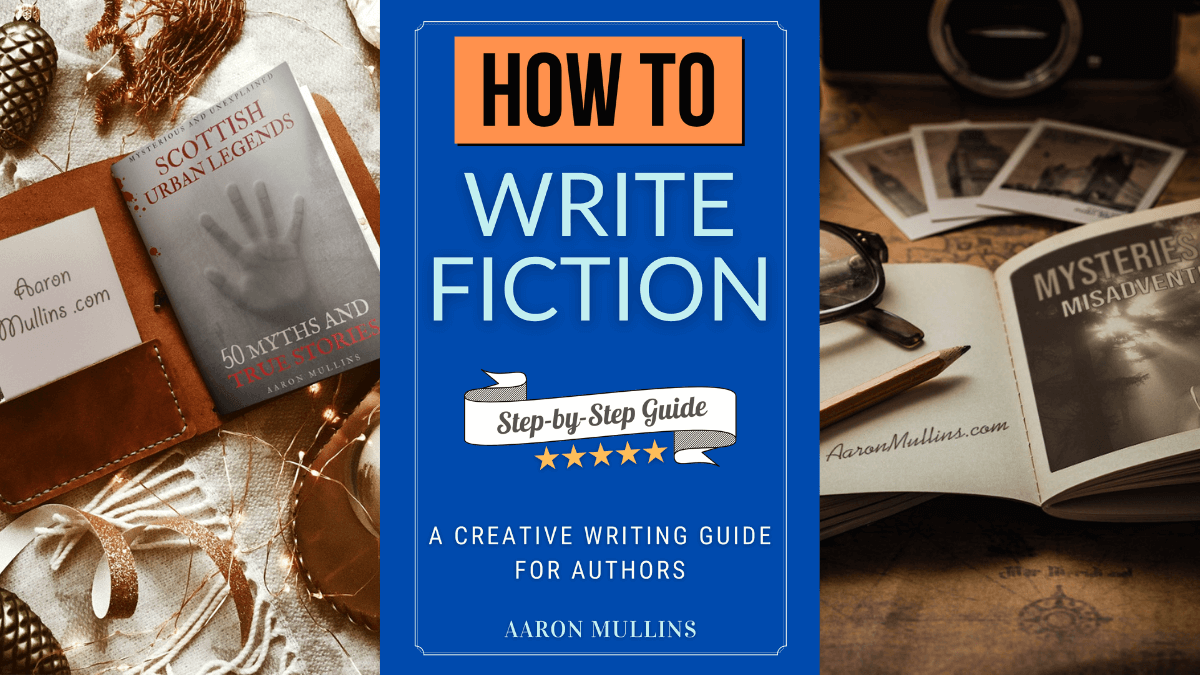
Average Length of a Book: Word Counts for 6 Fiction Forms, and How Long Yours Should Be
Average word counts for books can be confusing. How many words are in a short story? What is the ideal length for a fiction novel? How long should my book be? Find the answer to these writing questions here.
There are six main types of fiction writing forms. These six categories are flash fiction, short story, novelette, novella, novel and epic. The length of your writing determines which fiction format your story falls into. The average word count, or typical length, for each fiction writing category is listed in the image and table below.

For fiction average word counts, when it’s time to finally start writing and shaping your ideas into an actual story, you must choose what form your fiction writing will take. If you have already completed a short story, or are part-way through a novel, then you must still check that your chosen fiction form matches with your writing goals.
“The first draft is just you telling yourself the story.”
– Terry PratchettTypical Word Counts for Fiction
To determine the best book word count for you, look back over your writing, or think back over your daydreams, have they been of a short story, or flash fiction? Or do you have enough of a story arc and plot in your notes to fill the average word count of a full length novel?
Understanding the main fiction forms is important because the depth of your ideas helps you choose the length your writing goal. When writing prose fiction, authors generally choose their goal from one of six formats: flash fiction, short story, novelette, novella, novel and epic.

What is the word count for flash fiction?
Flash fiction is a very short body of work, with a word count sometimes as low as a few hundred words. The average length of flash fiction in the world of writing competitions is around 500 words.
It’s very rare for a book of flash fiction to be published. However, there are many online magazines and article sites dedicated to this form of writing.
Flash fiction is writing in the form of a snapshot of a single intriguing event, with very few characters, usually taking place within one setting. Flash fiction must still retain the beginning, middle and end elements of a full length story, including plot and character development, within a strict word count.
Ray Bradbury’s The Pedestrian and Virginia Woolf’s A Haunted House are both great examples of flash fiction.
“If there’s a book that you want to read, but it hasn’t been written yet, then you must write it.”
– Toni MorrisonWhat is the typical short story length?
Short stories are one of the most popular forms of writing and I have enjoyed publishing a number of short story collections. Short story competitions vary in length, but the average short story length is between 2,000 and 3,000 words.
A short story is a writing form that retains much of the same structure as full length novels, but in a condensed format. The reader needs to be dropped straight into the action and every sentence needs to drive the story forwards. Short stories still have plot and character development, within a self-contained theme.
When thinking about the typical length of a short story, it’s sometimes helpful to think of a short story as a single self-contained episode within a full length novel series. Think of a TV series that you enjoyed, and a particular episode you loved? Normally our favourite episodes drop us straight into the action and keep us gripped throughout, and a short story should do the same.
Short story collections are extremely popular on Amazon, but are less sought after by traditional publishers, who prefer full length novels.
There are numerous short story contests and you can find a huge list of the best ones on this very site:
As well as my top tips for winning writing competitions:
How to Win Writing Competitions

What is a novelette?
The average length of a novelette is generally considered to be a manuscript between 7,500 and 19,000 words. There isn’t a huge market for the novelette story form, so it’s incredibly rare for traditional publishers to seek out this length of work.
However, two very famous awards, the Hugo Awards and the Nebula Awards, provide opportunities to writers of novelette length science-fiction stories.
A novelette is a short writing form. Sometimes known as long short stories, or short novellas, novelettes follow the same story structure as full length novels, but with a much shorter word count. Containing plot and character development, novelettes tend to deal with light-hearted or whimsical story themes.
The average length of novelettes present short story writers with the option to tell a longer, stand alone story. And for novel writers, novelettes offer the chance to practice focusing their work on the details that really matter, within a much shorter framework.
The Call Of Cthulhu by H. P. Lovecraft is a great example of a successful novelette.
How long is a novella?
The average length of a novella is considered to be writing between 19,000 and 50,000 words. Similar to a novelette it will contain fewer fleshed out or elaborated elements than a full length novel, but still retains a similar structure in terms of plot and character development.
The typical length of a novella is a concentrated form of writing, originally designed to be read in a single extended sitting. They focus the story and plot events of a full length novel into a shorter format, and allow a short story to be expanded into richer detail.
The majority of novellas explore a single conflict, rather than pursue sub-plots. Character development is also normally reserved for the main protagonist. This creates a quicker pace for the story arc.
Animal Farm by George Orwell, A Clockwork Orange by Anthony Burgess and The Strange Case of Dr Jekyll and Mr Hyde all began life as a novella. This shows the impact that a well-written novella can have.With the rise of ebooks, particularly on Amazon, novellas have a thriving readership. Like novelettes, there are Hugo and Nebula awards for novellas, as well as a number of other established awards and competitions.

What is the average length of a novel?
The novel is the most popular form of writing and the most sought after by readers, agents and publishers. While anything over 50,000 words can be considered a novel, you should probably aim for an average length of novel between 75,000 and 90,000 words for your first novel, if you are looking to attract an agent or publisher.
There is an established worldwide market for typical length novels in all genres and an extensive number of competitions to match. There are a number of elements that go into creating an amazing novel, many of which rely upon the skill of the author. The Aaron Mullins website and blog explore all of the most important aspects in depth, to help you become the best writer you can be.
Average Book Lengths Guide
Now you know your target word count, my free author resources will help you reach it, with guides for every stage of writing a book.How long is an epic novel?
Epics are very long stories, with the average length of an epic novel usually around 200,000 words, often within the fantasy or historical genres. Typical length epic novels bring great depth to world-building, with many detailed setting and locations described throughout the story. There are also numerous characters, all of whom undergo individual and group development.
Lord of the Rings by J.R.R. Tolkien and Game of Thrones by George R.R. Martin are two examples of epic fantasy.
How long should my book be?
These six core categories are the main writing formats within which we usually define our author goals. But which one is fits best to your story ideas and ambitions as a writer?
Does one of the above fiction writing formats and average word counts immediately call out to you? Or have you already completed enough of a word count to fit within one of these categories?
The reason typical word lengths for fiction books is important is because it defines how much ‘story’ you can fit into your goal. Your target word count will affect how many characters you introduce, how much back story is required and many other aspects of your writing.
Therefore, when starting out, it helps to choose a goal that matches your writing ambitions from the start. You may even have a writing competition or literary magazine in mind, many of which have fixed word lengths for their submissions.
“A word after a word after a word is power.”
– Margaret Atwood
Typical word counts for fiction books are designed to help structure your writing. You’ll have just the right amount of each element present within your chosen length to create a fantastic story.
Writing to a typical word count also helps to focus the mind with a clear goal in mind, which improves motivation and increases our enjoyment of writing as we see clear progress towards our final product.
From an external perspective, readers and agents also tend to look for specific writing forms when choosing what to read, or who to represent. So writing to the average word count one of these six recognised writing forms allows you to be classified and recognised within that particular format.
However, once you embark on a writing goal, remember that they are not set in stone. When writing flash fiction, you may generate new ideas that mean your goal changes to a short story. This is fine and is a natural part of the creative writing process.
Note: I recognise that there are more writing forms, such as Microfiction (stories under 250 words) and even Six-Word Stories, such as Ernest Hemingway’s “For sale: Baby shoes, never worn.” All of which are fun to write.
Good luck, whichever goal you choose!
Aaron Mullins
Subscribe to get free stories
Pop in your email to join over 2,000+ readers and writers who receive free stories, tips, and advice:
.
-

Writing Fiction in a Dystopian Reality: How 2020 has Lost the Plot
When writing dystopian fiction in our somewhat dystopian society of 2020, everything you thought you knew about writing speculative fiction has been turned on its head.
(more…) -
Scottish Dialect: An Author’s Guide to Highland Dialogue
The beautiful lilt of a Scottish accent. It’s a wonderful thing to hear, but as I have discovered, an absolute headache to spell Scots dialect words so they sound just right to the ear.
How to write Scottish characters: with an authentic sounding Scottish accent, your character’s dialogue must contain the correct Scots words, to really bring the people of Scotland to life. Authors writing books in Scots must maintain the Scots language for their entire length, in their chosen Scottish dialect.
(more…) -
Boost Your Writing Skills: Top 10 Tips
My Top 10 Writing Tips offer quick advice for authors on how to improve their writing. They’re for anyone who wants stronger storytelling, smoother prose, and a clearer path towards finished work.
(more…) -

How to Win Writing Competitions
Creative writing competitions are a great way to give yourself a deadline, focus your mind and produce your best writing. Embark on a journey to conquer the world of creative writing competitions with our comprehensive guide. Whether you’re a seasoned author or a budding talent, this article is tailored to help you submit winning short stories, poetry, and books to various contests. From understanding judging criteria to crafting compelling entries, we’ve got the strategies you need.
(more…)